





A fall onto an outstretched hand can result in several different injuries to that arm. Among the most common injuries is a broken wrist. There are several different fractures that can occur throughout the wrist, the most common is a break at the end of the radius bone. This is often referred to as a “distal radius fracture”. This is the most commonly broken bone in the body, with over 600,000 breaks in the United States per year. The injury is commonly seen both in kids and adults. A broken wrist will cause pain, swelling, bruising, and difficulty moving the wrist. More severe fractures can result in a deformity of the arm, or tingling in the fingers. These injuries are typically seen in an emergency department or in an orthopaedist’s office, and a splint will be applied.
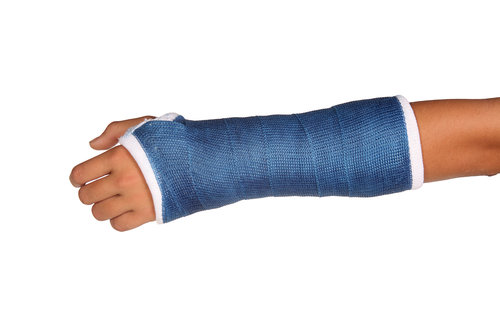
If the fracture is displaced, meaning the bone it not well lined up, a “reduction” may be needed to set the bone. Typically, a local anesthetic (lidocaine) is injected near the fracture, and the Hand Wrist are manipulated to improve the alignment of the wrist. A splint or cast is placed, and if x-rays show the bone is in an acceptable position, the fracture is allowed to heal.
In general, a broken wrist takes about 6 weeks to heal. Once x-rays show that the break has mended itself, you can start using the wrist again. Sometimes therapy is helpful to improve strength and flexibility of the wrist.
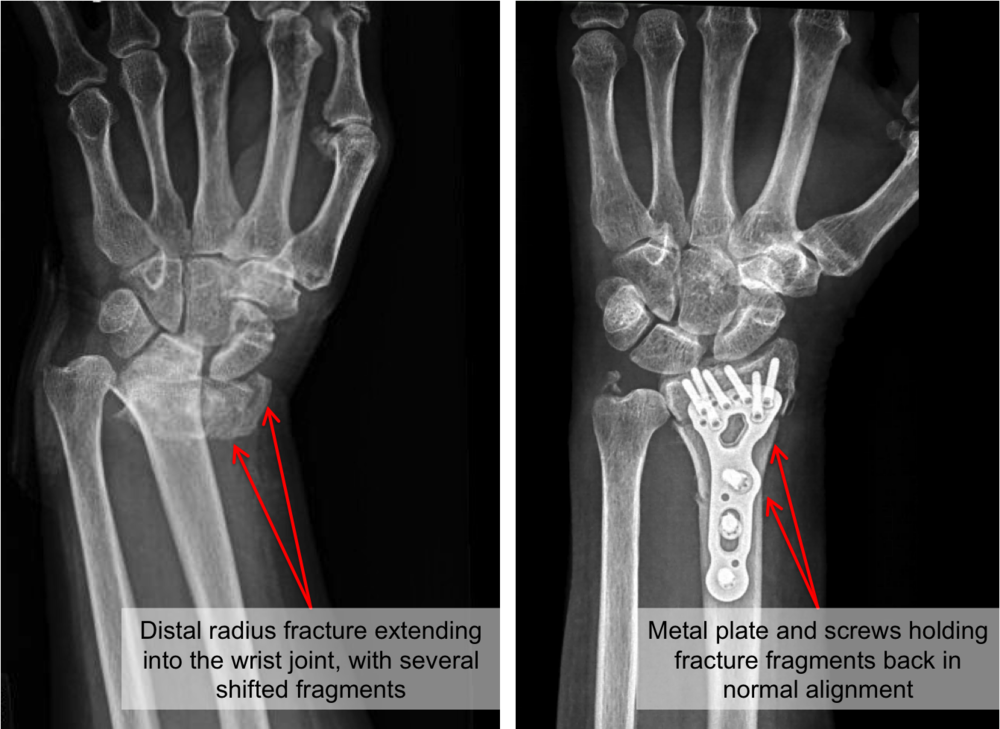
Sometimes, in more severe fractures, surgery may be recommended. A broken wrist with several pieces, a fracture that has severely shifted, or a break resulting in an uneven joint surface, can all cause problems. More severe fractures can result in pain, decreased ability to bend the wrist, and can lead to arthritis if allowed to heal in a suboptimal position. Surgery can improve the alignment of the bone to minimize these risks.
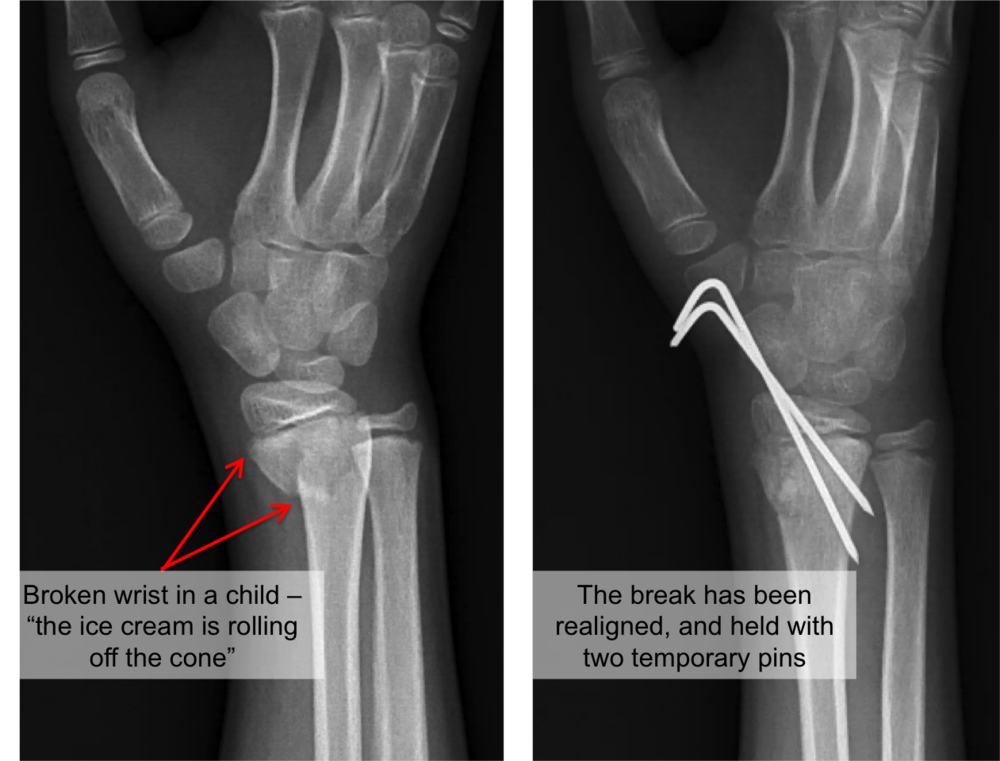
The surgery needed depends on the age of the patient and the fracture. Some simple fractures, or fractures in kids, can be treated with temporary pins without making an incision. The bone is lined up with the assistance of a small x-ray machine in an operating room, and pins are placed through the skin to hold the bone in place. These pins are typically removed in the office several weeks later once healing is underway.
Leading Hand Wrist Care at Raleigh Orthopaedic
If you’ve recently suffered a broken wrist, Raleigh Orthopaedic is committed to delivering the best care possible. Our team of Hand Wrist specialists have years of experience dealing with all manner of wrist injuries and conditions, including wrist fractures. We will work closely with you to create a customized care plan, based on your specific needs. Find your nearest clinic or visit a Raleigh Orthopaedic urgent care for immediate treatment today.